
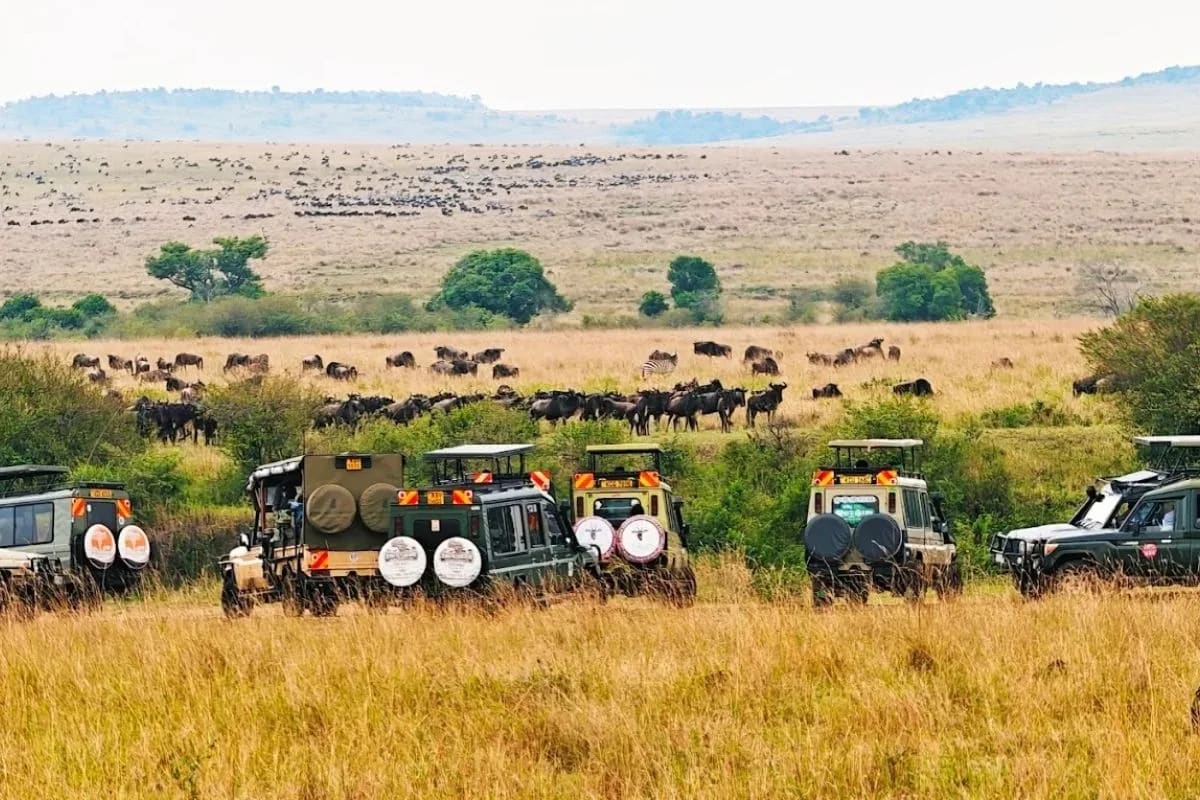
When to see the river crossings, when to find big cats without the crowds, and what park fees cost in 2026: a month-by-month guide to planning your Maasai Mara safari.
The Maasai Mara is good all year. What changes from month to month is what you'll see, how many other vehicles you'll share it with, and how much you'll pay to get in. Pick the right window and you could be watching a column of wildebeest hurl itself into the Mara River. Pick a different one and you'll have a lioness and her cubs almost to yourself, at half the park fee.
This guide walks through the Mara calendar month by month so you can choose the trip that fits what you want to see, and what you want to spend.
The short answer
- For river crossings: mid-July to early October. August is the peak.
- For big cats with fewer crowds: January to March.
- For the lowest prices and green landscapes: April to June, if you don't mind rain.
- For a quieter safari with good all-round game: November and December.
How the Great Migration moves
The wildebeest don't belong to Kenya or Tanzania. Around 1.3 million of them, travelling with hundreds of thousands of zebra and gazelle, move in a year-long loop around the Serengeti-Mara ecosystem, following the rain and fresh grass.
- January to March: the herds gather on the short-grass plains of the southern Serengeti in Tanzania to give birth. Around half a million calves are born in a few weeks.
- April to June: the herds drift north and west through Tanzania as the long rains end.
- July to October: they pour across the border into the Mara, crossing the Mara and Talek rivers again and again in search of grazing.
- November to December: the short rains begin and the herds head back south to Tanzania.
That's why the Kenyan side of the migration is concentrated in the second half of the year.
Month by month
| Months | What's happening | Crowds | Park fees |
|---|---|---|---|
| Jan to Mar | Dry, clear light, resident predators active | Low | Low season |
| Apr to May | Long rains, lush and green, some muddy tracks | Very low | Low season |
| June | First herds arrive late in the month | Rising | Low season |
| July | Big herds arrive, first crossings | High | High season |
| August | Peak crossings and predator action | Highest | High season |
| September | Herds spread across the plains, crossings continue | High | High season |
| October | Short rains start, herds begin leaving | Moderate | High season |
| Nov to Dec | Green plains, resident game, quieter | Low to moderate | High season |
January to March: big cats and clear skies
The migration is in Tanzania, but the Mara's resident wildlife stays put, and there's a lot of it. Lions, cheetahs and leopards are easier to find on short grass, the air is dry and the light is clean for photography. The Musiara Marsh area, home ground of the famous Marsh Pride, is especially rewarding. Fewer vehicles means you can sit with a sighting for as long as you like.
April and May: the green season
The long rains turn the Mara a deep, vivid green. Birdlife is at its best, the dust is gone and many camps drop their rates. Some tracks become muddy and a few camps close for maintenance, so this is a season for flexible travellers. Game viewing is still good, and you'll rarely see another vehicle.
June: the herds are coming
By late June the leading herds start arriving from the south. Predators are busy, the grass is long after the rains, and prices are still at low-season rates. It's a good gamble if your dates are fixed and you'd like a taste of the migration without peak-season costs.
July to October: peak migration
This is the Mara the documentaries show you. Herds stretch to the horizon, and at the rivers the wildebeest bunch nervously on the banks before one animal jumps and thousands follow, with crocodiles waiting below.
August is the busiest month: crossings are most frequent and predator activity is at its highest. September is often the sweet spot, with crossings still happening and slightly fewer vehicles than August. By late October most herds are heading south.
River crossings are governed by nature, not a calendar. Herds can wait on the bank for hours or days before they cross. Our guides stay in radio contact with other guides across the reserve so you can get to active crossing points quickly.
November and December: the quiet season
The herds have gone back to Tanzania and the short rains freshen the plains. Resident wildlife is excellent, the scenery is lush and there are fewer vehicles. It's a lovely time for honeymooners and photographers. Note that the high-season park fee still applies until the end of December.
Park fees in 2026
The Maasai Mara National Reserve is run by Narok County, not KWS. At the time of writing (September 2026), non-resident adults pay:
- USD 200 per day from July to December
- USD 100 per day from January to June
Tickets are valid for a single daylight visit of about 12 hours rather than a rolling 24 hours, so plan arrival times carefully. Kenyan citizens and residents pay much lower rates in shillings. Private conservancies bordering the reserve charge their own separate fees.
All Safarizuru Mara packages include park fees, so you won't have to work any of this out at the gate.
How long should you stay?
Three nights is the sweet spot. It gives you two full days in the reserve, which matters because crossings can't be scheduled. With one night you're relying on luck; with three you're giving yourself a real chance. If you're flying in, two nights can work because you arrive in time for an afternoon game drive on day one.
Getting there
- By road: roughly 5 to 6 hours from Nairobi, with the last stretch on rougher roads. It's part of the adventure, and you'll see a lot of the Rift Valley on the way.
- By air: about 45 minutes from Wilson Airport to one of the reserve's airstrips. You swap a long drive for an extra game drive.
Our recommendation
- First safari and you want the migration? Come between mid-July and September and book at least three nights.
- Want big cats, photography and value? Come between January and March.
- On a tight budget? Look at June or the green season, and spread the cost with Lipa Mdogo Mdogo.
Our Mara Migration Special is a 3-night safari with full board, a private 4x4, park fees included and an optional fly-in upgrade. If you'd like something different, ask us for a custom quote.
Frequently asked questions
When is the best month to see a river crossing?
August has the most frequent crossings, followed by September. July and early October can also be excellent. No month guarantees a crossing, which is why we recommend at least three nights.
Is the Maasai Mara worth visiting outside migration season?
Yes. The Mara has one of Africa's highest densities of big cats all year round. Outside the migration months you get fewer vehicles, lower park fees and often better photography conditions.
Is it safe to visit during the rainy season?
Yes. Some roads become muddy and slower, but experienced guides and 4x4 vehicles handle the conditions. You'll see fewer tourists and greener landscapes.
Do I need to book early for August?
Yes. Camps near the rivers fill up months in advance for July to September. Booking three to six months ahead gives you the best choice.
Ready to experience this yourself?
Browse our packages or get a custom quote.