
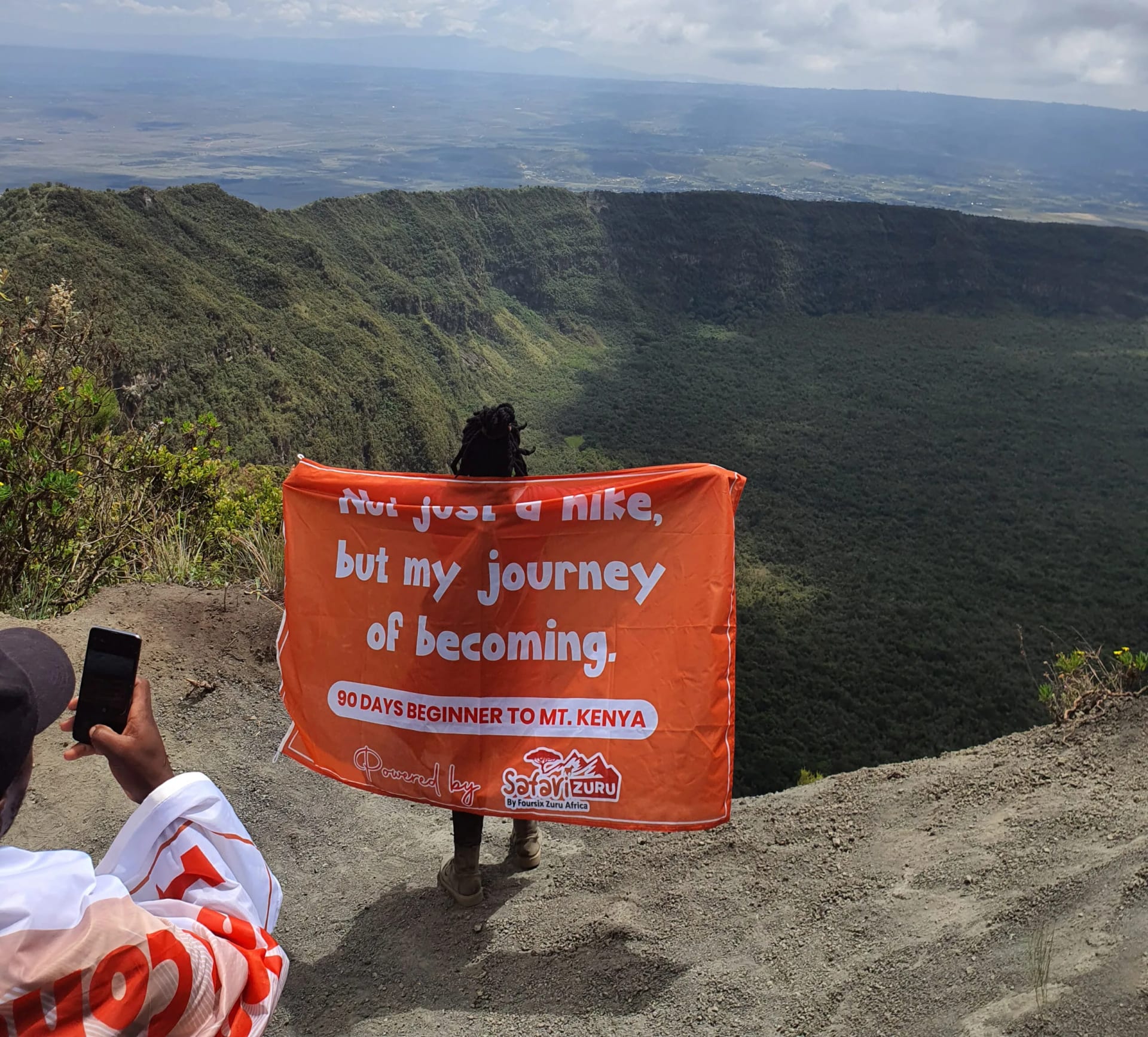
The route, how hard it really is, what to pack, park fees and the best time to go: everything you need before you hike Mount Longonot's crater rim.
Mount Longonot is the hike most Nairobi adventurers do first, and many come back to it again and again. It's close enough for a day trip, hard enough to feel like an achievement, and the view from the crater rim is one of the best in the Rift Valley. This guide covers everything you need to know before you go: the route, how hard it really is, what to pack and when to go.
Longonot at a glance
| Height | 2,776 m above sea level |
| Distance from Nairobi | About 60 km, roughly 1.5 to 2 hours by road |
| Hike distance | About 13 km round trip including the full crater rim |
| Time needed | 4 to 6 hours of hiking |
| Difficulty | Moderate to challenging: steep, with loose volcanic ground |
| Managed by | Kenya Wildlife Service (KWS) |
Longonot is a dormant stratovolcano that last erupted in the 1860s. From below it looks like a near-perfect cone; from the top you discover it's hollow, with a steep-walled crater about 1.8 km across and a forest growing on its floor.
The route
Stage 1: gate to the crater rim (about 1 to 1.5 hours)
From the KWS gate, a clear trail climbs through open grassland and scrub towards the rim. The first section is gentle, then it gets steadily steeper. The last stretch is the hardest part of the day: a steep climb on loose volcanic ash and gravel, where it helps to take short steps and use your hands occasionally.
There are rest points on the way up, and each one gives you a wider view over the Rift Valley floor and Lake Naivasha. Take your time. It isn't a race.
Stage 2: around the crater rim (about 2 to 3 hours)
When you reach the rim you have two options:
- Turn back after enjoying the view into the crater. This is a good choice for beginners or if the weather turns.
- Do the full rim circuit, about 7.2 km. We strongly recommend it. The trail rises and falls around the crater edge to the summit, the highest point of the rim, then loops back to where you started.
The rim path is narrow in places with steep drops on both sides, so keep to the trail and watch your footing, especially when it's windy. Along the way you'll see Lake Naivasha, the Mau Escarpment, Mount Suswa and, on a clear day, the Aberdares.
Stage 3: the descent (about 1 hour)
Coming down is where most slips happen. The ash is loose and the slope is steep, so go slowly, keep your weight over your feet and use trekking poles if you have them. Your knees will thank you.
How hard is it?
Longonot is achievable for anyone with reasonable fitness, but it's not a walk in the park. The climb to the rim is steep and sustained, and the full circuit adds several more hours on uneven ground. If you can walk briskly for an hour and climb several flights of stairs without stopping, you'll manage it with rests.
On Safarizuru group hikes, our trail leaders set a comfortable pace, and nobody gets left behind.
What to bring
- Hiking boots or trail shoes with good grip. Smooth-soled trainers struggle on the loose ash.
- At least 2 to 3 litres of water. There's no water on the mountain.
- Snacks and a packed lunch. Energy bars, fruit and nuts are ideal.
- Sun protection: hat, sunglasses and SPF 50+ sunscreen. There's very little shade on the rim.
- A light jacket. The rim can be windy and cool, even on a hot day.
- A buff or scarf to keep dust out of your face on windy or dry days.
- Trekking poles (optional, but very helpful on the descent).
- Your ID for park entry, and a small amount of cash or M-Pesa for extras.
Park fees
Mount Longonot National Park is run by KWS. Under the fees in force since October 2025, adults pay:
- East African citizens: KES 500
- Kenya residents: KES 675
- Non-residents: USD 50
Fees are paid electronically through eCitizen. On Safarizuru group hikes, park fees are included in the price.
Best time to hike
Longonot can be hiked all year. The best conditions are in the dry months, from January to March and June to October. During the long rains (April and May) and the short rains (November), the path can be slippery and views are often hidden by cloud.
Whatever the month, start early. We leave Nairobi at dawn so we're on the trail before the midday heat builds in the open crater.
Wildlife on the mountain
Longonot is a national park, so keep your eyes open on the lower slopes. Zebra, giraffe, gazelles and antelope are regularly seen, and buffalo live in the area too. Your guide will tell you how to behave around wildlife: keep your distance and never approach animals.
Tips from our trail leaders
- Pace yourself on the first climb. Going out too fast is the most common mistake.
- Drink before you're thirsty, especially on hot days.
- Take photos on the rim, not on the steep sections. Stop in a safe spot first.
- Wear clothes you don't mind getting dusty. Longonot's ash gets everywhere.
- Stretch afterwards. The descent is tough on the legs.
Hike Longonot with Safarizuru
Our group hikes include return transport from Nairobi, park fees and an experienced trail leader, so all you have to do is show up with your boots on. Check upcoming dates on the group hikes calendar, or ask us about a private hike for your team or friends.
Frequently asked questions
Can beginners hike Mount Longonot?
Yes, with reasonable fitness. The climb to the rim is steep but short, and you can turn back at the rim if you don't want to do the full circuit.
How long does the Longonot hike take?
About 4 to 6 hours for the full crater rim circuit including rests, or 2 to 3 hours if you only go up to the rim and back.
Can you go down into the crater?
The crater floor isn't part of the standard route, and descending the crater walls is steep and dangerous. Stick to the marked rim trail.
Is there water or food on the mountain?
No. Bring all the water and food you'll need for the day and carry your rubbish back down.
Ready to experience this yourself?
Browse our packages or get a custom quote.