
Reticulated giraffe, Grevy's zebra, gerenuk, beisa oryx and Somali ostrich: five species you won't see in the southern parks, and how to spot them all in Samburu.
Drive north from Nairobi, past Mount Kenya and across the equator, and the country changes completely. The green highlands give way to red earth, thorn scrub and dry riverbeds lined with doum palms. This is Samburu, and the animals here look different too.
Samburu National Reserve is home to the Samburu Special Five: five species adapted to Kenya's hot, dry north that you won't find in the Maasai Mara, Amboseli or the other southern parks. Seeing all five on one trip is a badge of honour for Kenyan safari-goers. Here's what to look for.
Where is Samburu?
Samburu National Reserve lies on the northern bank of the Ewaso Ng'iro River, about 350 km north of Nairobi, a drive of roughly 5 to 6 hours. Across the river is Buffalo Springs National Reserve, and nearby is Shaba National Reserve. Together they form one of Kenya's most rewarding and least crowded safari areas.
The Ewaso Ng'iro is the lifeline of the region. In the dry season, almost every animal in the area comes to the river to drink, which makes game viewing along its banks outstanding.
The Special Five
1. Reticulated giraffe
The most striking of all giraffes. Instead of the ragged, blotchy patches of the Maasai giraffe you see in the south, the reticulated giraffe has large, neat, liver-red polygons separated by bright white lines, like a crazy-paving pattern.
- Where to look: browsing on acacia trees and moving through the doum palms along the river.
- Conservation status: Endangered. Numbers fell sharply in recent decades, and roughly 16,000 remain, most of them in northern Kenya.
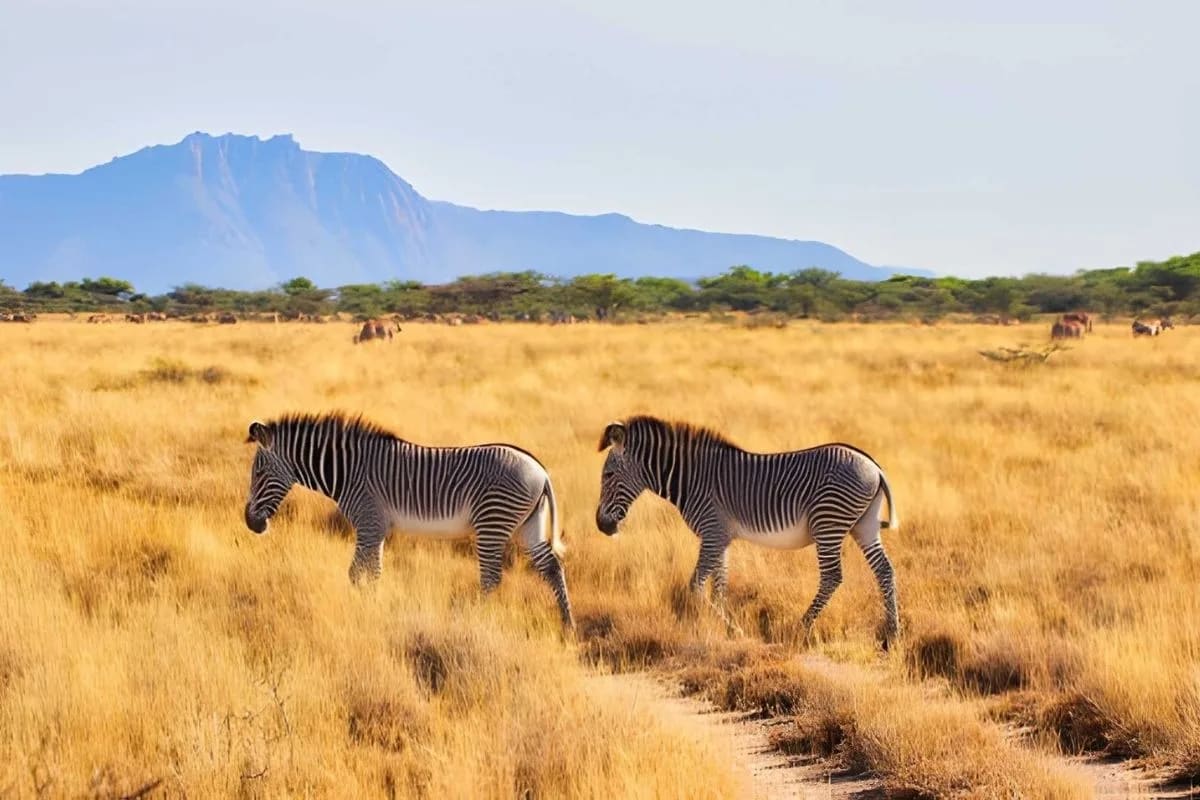
2. Grevy's zebra
Bigger than the common plains zebra, with much narrower stripes that run all the way to the hooves, a white belly, and large, rounded, almost Mickey Mouse ears. It's the largest wild member of the horse family.
- Where to look: open grassy plains near water, often in small groups.
- Conservation status: Endangered. Only around 3,000 remain in the wild, and about 90% of them live in northern Kenya. Seeing one is special.
3. Gerenuk
The name comes from the Somali word for "giraffe-necked", and it suits this slender antelope perfectly. The gerenuk's party trick is standing upright on its hind legs to reach leaves high in the bushes, with its long neck stretched even further.
- Where to look: dense thorn scrub away from the river. Look for an antelope that seems to be standing on tiptoe.
- Fun fact: gerenuk can survive for long periods without drinking at all, getting nearly all their moisture from the leaves they eat.
4. Beisa oryx
A handsome, desert-adapted antelope with a pale grey coat, a bold black-and-white face mask and long, straight, rapier-like horns that can reach about 75 to 80 cm. Both males and females have horns.
- Where to look: open plains, often in small herds, sometimes standing completely still in the heat.
- Conservation status: Endangered.
5. Somali ostrich
Now recognised as a separate species from the common ostrich you'll see in the Mara. The easiest way to tell them apart: male Somali ostriches have blue-grey skin on their necks and thighs, which turns an intense blue during the breeding season. The common ostrich's skin is pink.
- Where to look: open plains, often near grazing herds of zebra and oryx.
- Conservation status: Vulnerable.
More than the Special Five
Samburu isn't only about rare species:
- Elephants are a highlight, and Samburu's herds are among the best studied in Africa. Watching a family cross the Ewaso Ng'iro is unforgettable.
- Big cats: lions and leopards are regularly seen, and cheetahs hunt on the open plains.
- Birds: more than 450 species have been recorded in the wider area, including the vulturine guineafowl with its cobalt-blue chest.
- Culture: the Samburu people, close relatives of the Maasai, are known for their colourful beadwork and traditional way of life.
When to visit
Samburu is dry most of the year and can be visited in any month. The best game viewing is in the dry seasons, from June to October and from January to February, when animals gather around the river. During the rains (roughly April to May and November), the landscape turns green and animals spread out, but it's still a beautiful time to go.
It gets hot, often above 30°C in the middle of the day, so game drives run early in the morning and late in the afternoon, when animals are most active.
Tips for spotting all five
- Go with a guide who knows the area. Each of the five prefers a different habitat, so knowing where to look matters.
- Start early. Animals are most active in the cool of the morning.
- Explore away from the river too. Gerenuk and oryx prefer the dry scrub and plains.
- Bring binoculars. Many sightings start as a shape in the distance.
- Stay at least one night. It gives you an evening and a morning drive, doubling your chances.
Visit Samburu with Safarizuru
Our Twende Samburu Overland Safari is a 2-day, 1-night adventure from Nairobi at an unbeatable price. It includes return transport, park fees, meals and tented accommodation, plus game drives in search of the Special Five and a bonfire night at camp. You can also spread the cost with Lipa Mdogo Mdogo.
See the Twende Samburu trip and dates, or ask for a private Samburu safari.
Frequently asked questions
Can I see the Special Five in the Maasai Mara?
No. These five species live in Kenya's arid north. Samburu and its neighbouring reserves are the most accessible places to see all of them.
How many days do I need in Samburu?
A 2-day, 1-night trip gives you a good chance of seeing the Special Five. Two or three nights lets you explore Buffalo Springs and Shaba as well, and travel at a more relaxed pace.
Is Samburu safe to visit?
Yes. Samburu National Reserve is a well-established safari destination with lodges, camps and experienced guides. As with any park, follow your guide's instructions and stay in the vehicle during game drives.
Ready to experience this yourself?
Browse our packages or get a custom quote.